
The Curious History of Saffron Buns
From Cornwall to Scandinavia
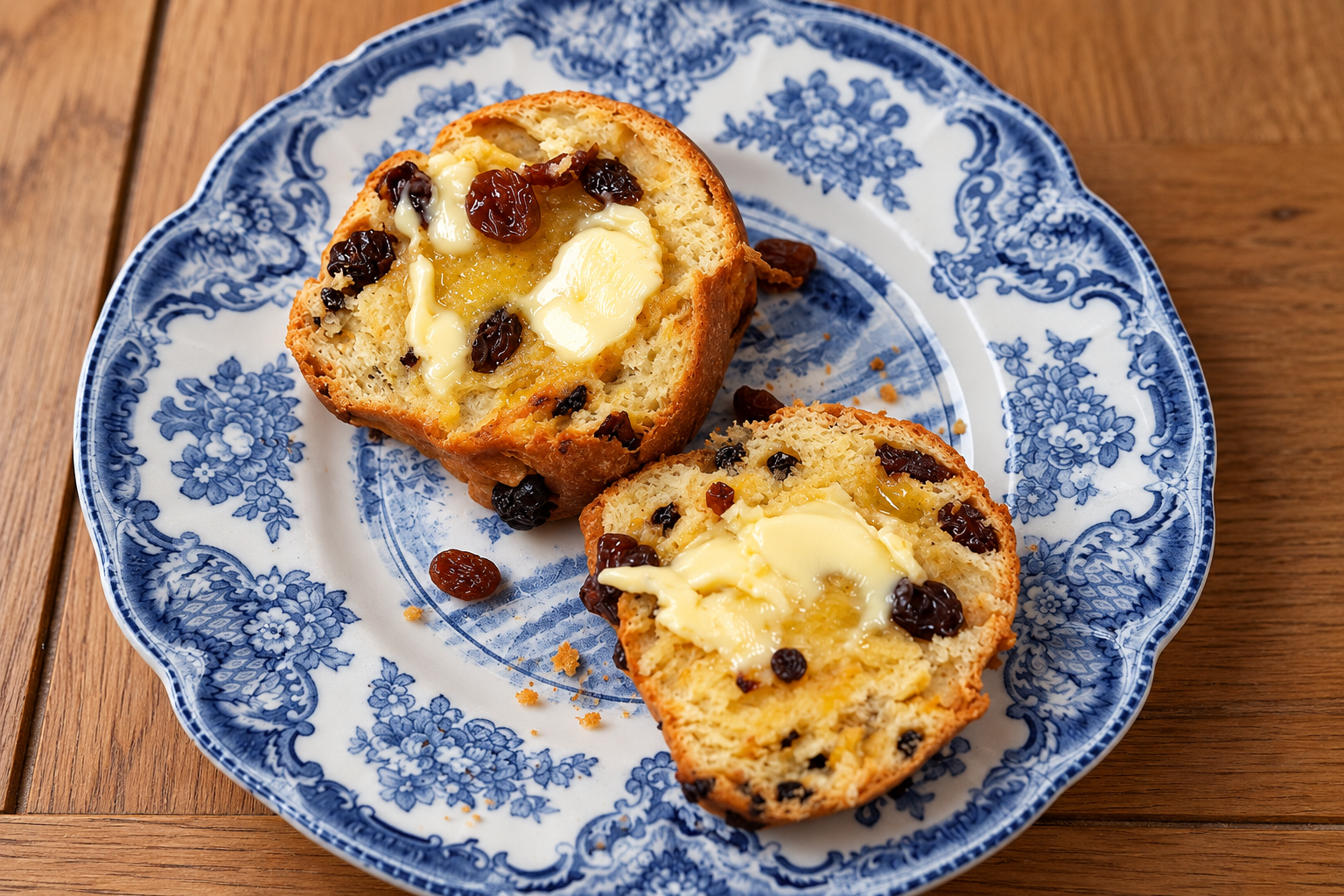
From Cornish tea treats to Swedish Lucia celebrations, discover how one extraordinary spice became part of northern Europe's most cherished baking traditions.
Few ingredients connect distant cultures quite like saffron. Its delicate crimson threads have travelled across continents for thousands of years, colouring and flavouring everything from Persian rice and Moroccan tagines to Mediterranean seafood dishes.
Yet perhaps one of saffron's most surprising journeys took it into the kitchens of northern Europe, where it became an essential ingredient in a remarkable family of sweet breads and buns.
In Cornwall, saffron buns became associated with village celebrations, religious gatherings and afternoon tea. In Sweden, golden saffron breads became an unmistakable symbol of light during the darkest days of winter. And in Norway, similar buns became part of the celebrations surrounding Saint Lucia's Day.
Although these traditions share a common ingredient, their recipes, histories and cultural meanings are wonderfully different.
Cornwall: A Golden Tradition at the Edge of England
At the southwestern tip of Britain, Cornwall has preserved one of the country's most distinctive culinary traditions: the Cornish saffron bun.
Rich, golden and filled with dried fruit, these sweet yeast buns are quite unlike ordinary British teacakes. Their characteristic colour comes from saffron infused into the liquid used to make the dough, while currants, raisins, candied peel and a little mixed spice give them their unmistakably comforting flavour.
Larger versions of the same dough are traditionally baked as saffron cake, a fruit-studded loaf sliced and generously buttered.
But how did a spice associated with the Mediterranean and Middle East become such an important part of Cornish baking?
Tin, Trade and the Arrival of Saffron
Cornwall's relationship with international trade stretches back to antiquity.
Its rich deposits of tin made the peninsula an important source of a metal essential for producing bronze. Throughout the centuries, Cornish merchants and seafarers maintained connections with trading centres far beyond Britain's shores.
One popular explanation for Cornwall's saffron tradition suggests that ancient Phoenician merchants exchanged exotic spices for Cornish tin. It is an appealing story, linking the golden spice to the maritime history of the ancient Mediterranean.
However, there is little firm historical evidence that Phoenician traders introduced saffron directly to Cornwall.
A more convincing explanation lies in the extensive trading networks of medieval and early modern Europe, when saffron from Spain and the Mediterranean was already a highly valued commodity.
Cornish ports were connected to maritime routes that carried wine, salt, textiles, spices and other goods between Britain and continental Europe. Saffron could readily have reached the region through these commercial networks.
As we explored in our earlier article, The History of Saffron in England, saffron was also cultivated extensively in Essex and Cambridgeshire during the medieval and Tudor periods.
Whether Cornwall's baking tradition developed principally through imported saffron, English-grown saffron or a combination of both remains uncertain.
What is beyond doubt is that the Cornish developed a particular affection for the spice, preserving its place in local baking long after saffron disappeared from everyday cookery in much of Britain.
Tea Treats, Revel Buns and Village Celebrations
Cornish saffron buns were not simply everyday bread.
They became associated with celebrations, hospitality and communal gatherings, particularly during the nineteenth century.
Known variously as revel buns or tea treat buns, they were served at village festivities, church celebrations and special occasions.
A revel was traditionally a local feast or celebration, often connected with the anniversary of a church's dedication.
Tea treats became especially important in Cornish Methodist communities. Sunday schools organised gatherings and outings where children and families enjoyed tea, games and generous quantities of sweet buns.
In some communities, these were substantial affairs, bringing together people from neighbouring villages and providing an important opportunity for socialising.
The saffron bun, with its distinctive golden crumb and rich fruit-filled dough, was perfectly suited to such occasions.
It was something special: a simple bread transformed into a celebratory treat by the addition of an ingredient that had once been reserved for the wealthy.
Today, saffron buns remain a familiar sight in Cornish bakeries, farm shops and tearooms. Their continued popularity is a testament to the region's remarkable ability to preserve its culinary heritage.
Sweden: Saffron and the Festival of Light
Travel northeast across Europe and we encounter another extraordinary saffron tradition.
In Sweden, lussekatter, also called lussebullar, are golden, gently sweetened buns traditionally eaten during Advent and especially on 13 December, Saint Lucia's Day.
Unlike their Cornish cousins, Swedish saffron buns are usually made without the generous mixture of dried fruit and mixed spices found in West Country recipes.
Instead, they are shaped into elegant curls and spirals, most famously a reversed S-shape, with a raisin pressed into each end.
Their bright golden colour and delicate saffron aroma are central to their identity.
Saint Lucia and the Darkest Days of Winter
Saint Lucia's Day is one of Sweden's most atmospheric seasonal celebrations.
Traditionally, a young woman dressed in white, representing Saint Lucia, leads a procession wearing a crown of lights. She is often accompanied by attendants carrying candles and singing traditional songs.
The celebration brings light, warmth and companionship to a season when daylight is scarce.
Golden saffron buns are served alongside coffee or other warming drinks, their colour beautifully reflecting the festival's association with light.
The historical roots of these buns are complex.
Scandinavian food historians trace their development partly to earlier sweet breads from the Netherlands and northern Germany, with the distinctive buns becoming increasingly associated with Swedish Lucia celebrations during the nineteenth century.
Older folklore surrounding the name and shape also forms part of their history, although some popular explanations are difficult to establish with certainty.
What is clear is that saffron, once a rare and costly imported spice, became a treasured ingredient in one of Sweden's most recognisable Christmas traditions.
Norway: A Shared Tradition with a Different History
Across the border in Norway, saffron buns are also known as lussekatter and are similarly associated with Saint Lucia's Day.
Their appearance and flavour are generally very close to the Swedish versions.
They are made from a lightly sweetened yeast dough enriched with milk and butter, coloured with saffron and shaped into distinctive spirals, often decorated with raisins.
However, there is an interesting historical difference.
Although Sweden's modern Lucia celebrations developed during the nineteenth century, the custom became widely established in Norway much later, particularly from the late 1950s onwards.
Today, Norwegian schools and kindergartens frequently celebrate Lucia with candlelit processions, songs and freshly baked saffron buns.
Norwegian folklore also contains older traditions surrounding Lussi, a mysterious figure associated with the long winter nights. These beliefs are distinct from the modern Lucia celebration, although the names and customs have become intertwined in popular tradition.
The Norwegian saffron bun therefore illustrates how a culinary custom can cross a national border and acquire a place within another country's seasonal celebrations.
Three Countries, Three Baking Traditions
What makes these breads particularly fascinating is not simply their shared use of saffron, but the different ways in which they reflect local culture.
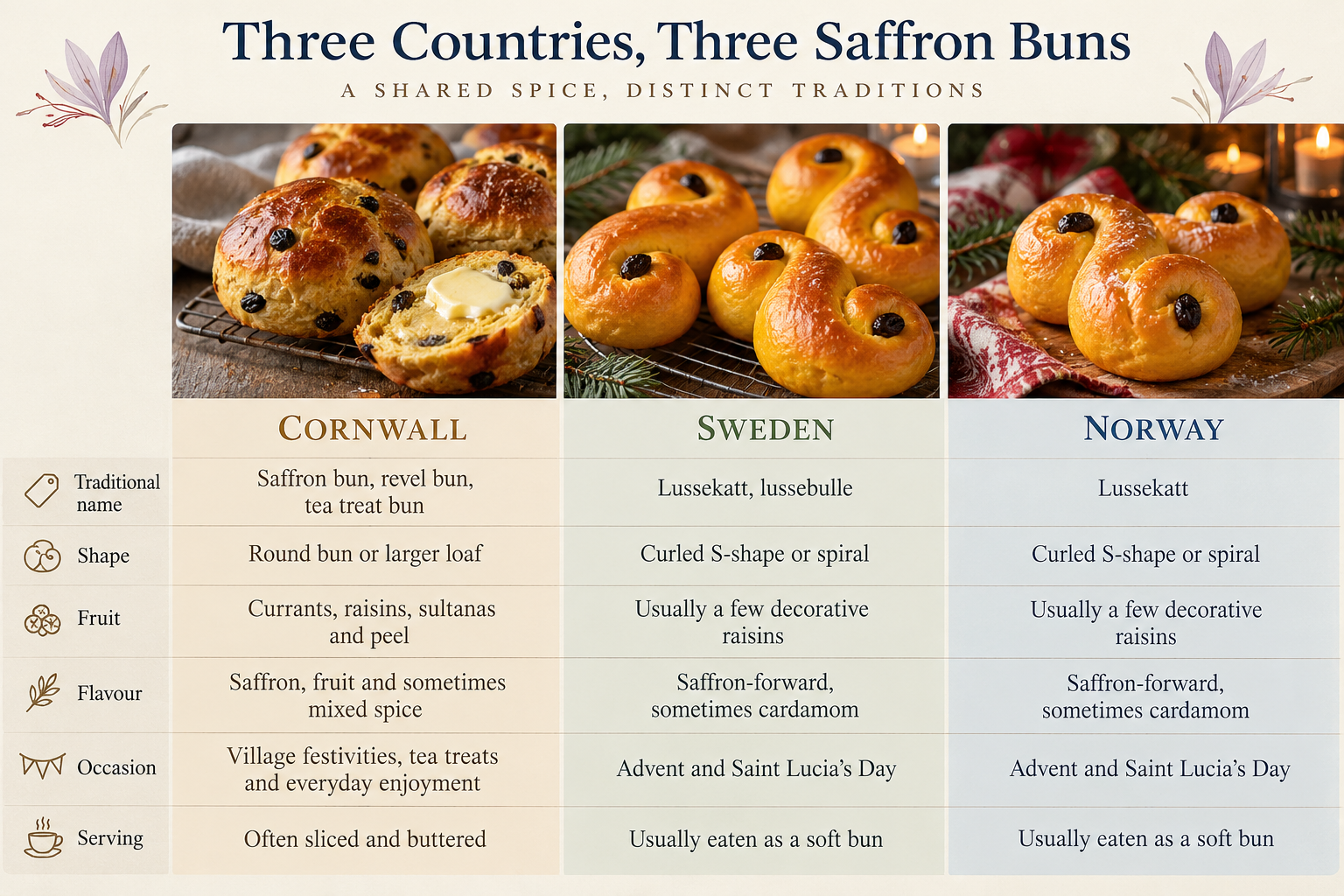
The Cornish version is richer in dried fruit and closer in character to a traditional British fruited teacake.
The Scandinavian versions are generally lighter in flavour, allowing the saffron itself to take centre stage.
Yet all three traditions share something important: the transformation of a rare and valuable spice into a food associated with generosity, celebration and togetherness.
The Secret is in the Saffron
For centuries, saffron's extraordinary cost made it a symbol of wealth and prestige.
Today, although it remains the world's most expensive spice by weight, only a small quantity is needed to transform a batch of homemade buns.
Good saffron contributes much more than colour.
Its complex aroma combines delicate floral notes with hints of honey, hay and gentle earthiness. These characteristics work particularly well with sweet, buttery dough and dried fruit.
The secret is to use genuine saffron threads and allow them time to release their colour and flavour into warm liquid before incorporating them into the dough.
At Saffron Caravane, we source our Grade 1 saffron from Taliouine in Morocco's Anti-Atlas Mountains, where the crocus flowers are harvested by hand and the delicate stigmas carefully separated and dried.
The same traditional skills that have preserved saffron cultivation in Morocco make it possible to recreate these much-loved European recipes in our own kitchens.
And what better place to begin than Cornwall?
Traditional Cornish Saffron Buns
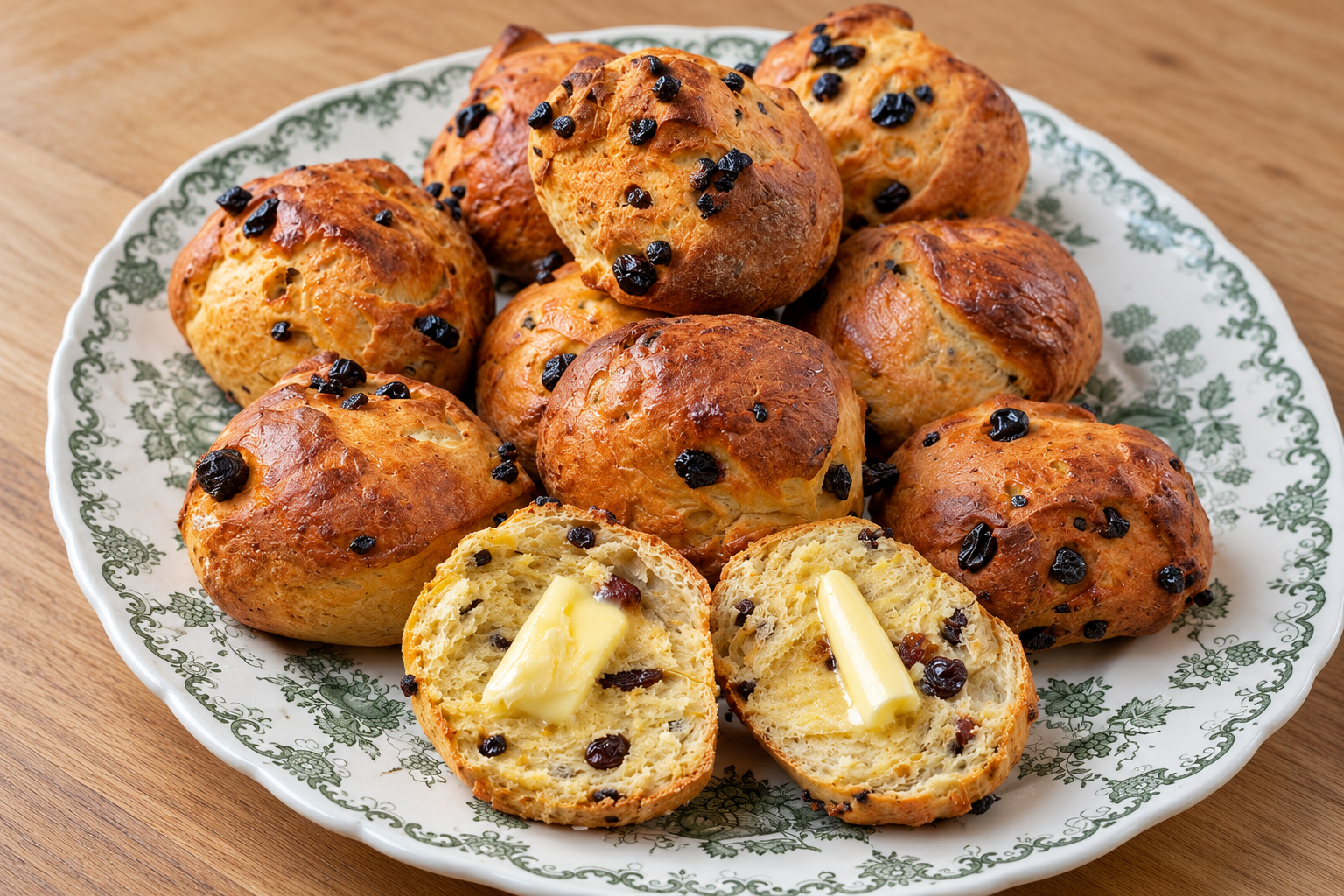
A classic fruit-filled Cornish bake, made with real saffron threads and served warm with butter.
This recipe is inspired by traditional Cornish baking, with a generous mixture of dried fruit, a delicate saffron infusion and a little mixed spice.
The result is a soft, golden bun with a wonderfully fragrant crumb.
Makes: 10-12 buns
Preparation: Approximately 30 minutes, plus saffron infusion
Proving: Approximately 2–3 hours
Baking: 18–22 minutes
Oven: 190°C conventional / 170°C fan
Ingredients
For the saffron infusion
0.2g Saffron Caravane Grade 1 saffron threads
250ml whole milk
For the dough
500g strong white bread flour
75g unsalted butter, softened
75g caster sugar
7g instant dried yeast
7g fine salt
1 medium egg
½ teaspoon mixed spice
125g currants
50g sultanas
40g mixed candied peel
Finely grated zest of half an orange (optional)
For the glaze
25g caster sugar
25ml water
Method
1. Infuse the saffron
Gently warm the milk in a small saucepan until it is hot but not boiling.
Lightly crush the saffron threads between your fingers or in a small mortar, then add them to the warm milk.
Remove from the heat, cover and leave to infuse for at least 30 minutes, preferably 45 minutes.
The milk will gradually develop a beautiful golden colour and a delicate saffron aroma.
Allow it to cool until lukewarm before using.
2. Prepare the dough
Place the flour, sugar and mixed spice in a large mixing bowl.
Add the yeast and salt on opposite sides of the bowl, then mix everything together.
Add the softened butter, egg and saffron-infused milk, including all the saffron threads.
Mix until a soft dough forms. If necessary, add a tablespoon or two of extra milk; the dough should be soft and slightly tacky rather than dry.
3. Knead
Turn the dough onto a lightly floured surface and knead for approximately 10 minutes, until smooth and elastic.
Alternatively, use a stand mixer fitted with a dough hook for 6–8 minutes.
Work in the currants, sultanas, candied peel and optional orange zest until evenly distributed.
4. First proving
Place the dough in a lightly oiled bowl and cover with a clean tea towel.
Leave in a warm place for approximately 1–2 hours, or until roughly doubled in size.
Enriched dough can take a little longer to rise, particularly in a cool kitchen.
5. Shape the buns
Turn the risen dough onto a lightly floured surface and gently press out the air.
Divide into 10-12 equal pieces and shape each into a smooth, round bun.
Arrange on two baking trays lined with baking parchment, leaving space between them.
6. Second proving
Cover loosely and leave to rise for a further 40–60 minutes, until noticeably puffy.
Meanwhile, preheat the oven to 190°C conventional or 170°C fan.
7. Bake
Bake for approximately 18–22 minutes, until the buns are golden brown and cooked through.
Their colour should be a warm golden yellow rather than a dark brown.
8. Glaze
While the buns are baking, gently heat the sugar and water together until the sugar dissolves.
Brush the warm glaze over the buns immediately after removing them from the oven.
Transfer to a wire rack and allow to cool slightly.
How to Serve
Cornish saffron buns are at their best while still slightly warm.
Slice them in half and spread generously with good salted butter, allowing it to melt into the golden crumb.
They are equally delicious toasted the following day, accompanied by a pot of tea.
For a particularly indulgent Cornish treat, try serving them with a little clotted cream.
The buns will keep for 2–3 days in an airtight container and can also be frozen.
A Final Thought: A Small Spice with an Extraordinary Story
From the tin-trading ports of Cornwall to the candlelit celebrations of Scandinavia, saffron buns tell a story far greater than their simple ingredients might suggest.
They remind us that food traditions rarely develop in isolation.
They travel with merchants, sailors, families and communities, adapting to local tastes and customs while preserving something of their origins.
In Cornwall, saffron became part of a tradition of hospitality and communal celebration. In Sweden and Norway, it became a symbol of warmth and light during the darkest season of the year.
And in each golden bun, we find a little reminder of the extraordinary journey of one of the world's oldest and most treasured spices.
Bring a little of that history into your own kitchen with Grade 1 Moroccan saffron from Saffron Caravane.