
Frequently Asked Questions
Frequently Asked Questions About Moroccan Saffron
What makes Taliouine saffron so special?
Taliouine saffron is grown in Morocco's Anti-Atlas Mountains, where the combination of altitude, sunshine, cool nights, and mineral-rich soils creates ideal growing conditions. Harvested by hand each autumn and carefully dried using traditional methods, Taliouine saffron is prized for its intense aroma, vibrant colour, and high concentration of natural flavour compounds. The region is recognised as Morocco's premier saffron-producing area and benefits from Protected Designation of Origin (AOP) status.
Is your saffron 100% pure?
Yes. Saffron Caravane supplies only 100% pure Grade 1 Moroccan saffron sourced directly from trusted growers in Taliouine. Our saffron contains no additives, dyes, fillers, preservatives, or artificial flavourings.
Is your saffron organic?
Our saffron is cultivated using traditional farming methods with great care for the local environment. Please refer to individual product descriptions for current organic certification details.
How can I tell if saffron is genuine?
Authentic saffron threads:
Are deep crimson red with trumpet-shaped ends.
Release their colour gradually when soaked in warm water.
Produce a distinctive aroma with notes of honey, hay, and flowers.
Taste slightly bitter rather than sweet.
Remain intact rather than breaking into powder.
We guarantee the authenticity and traceability of every batch we sell.
What does Moroccan saffron taste like?
Premium Moroccan saffron offers a complex flavour profile with subtle floral notes, hints of honey and hay, and a rich earthy depth. It adds both flavour and colour without overpowering a dish.
Why is saffron so expensive?
Saffron is the world's most labour-intensive spice. Each flower produces only three delicate stigmas, all of which must be harvested by hand. It takes approximately 150,000 to 200,000 flowers to produce one kilogram of dried saffron, making it one of the rarest and most valuable spices available.
How many flowers are needed to produce saffron?
On average, about 150 flowers are required to produce 1 g of dried saffron. This intensive harvesting process is one of the reasons saffron is often called "red gold."
How should I use saffron in cooking?
For the best results, crush or soak the saffron threads in warm water, milk, or stock for 10–20 minutes before adding them to your recipe. This releases the colour, aroma, and flavour more effectively. Saffron is commonly used in paella, risotto, tagines, seafood dishes, desserts, and tea.
How much saffron should I use?
A little saffron goes a long way.
Tea for one person: 3–5 threads
Rice for 2–4 people: 15–20 threads
Paella or risotto for 4–6 people: 20–30 threads
Tagines and stews: 15–25 threads
Most family recipes require only a small pinch.
How many saffron threads are in one gram?
One gram typically contains between 400 and 500 saffron threads, depending on thread size and moisture content. This means even a small quantity can provide many servings.
How long does saffron last?
When stored correctly, saffron can maintain its quality for two to three years. Its flavour and aroma are strongest during the first 12 to 24 months after harvest.
How should I store saffron?
Store saffron in an airtight container away from direct sunlight, heat, and moisture. A cool, dark cupboard is ideal. Avoid refrigeration, as condensation can affect quality.
Is your saffron ethically sourced?
Yes. We work closely with farming families and cooperatives in Taliouine to support fair pricing, sustainable agriculture, and the preservation of traditional saffron-growing practices.
Can saffron be used in tea?
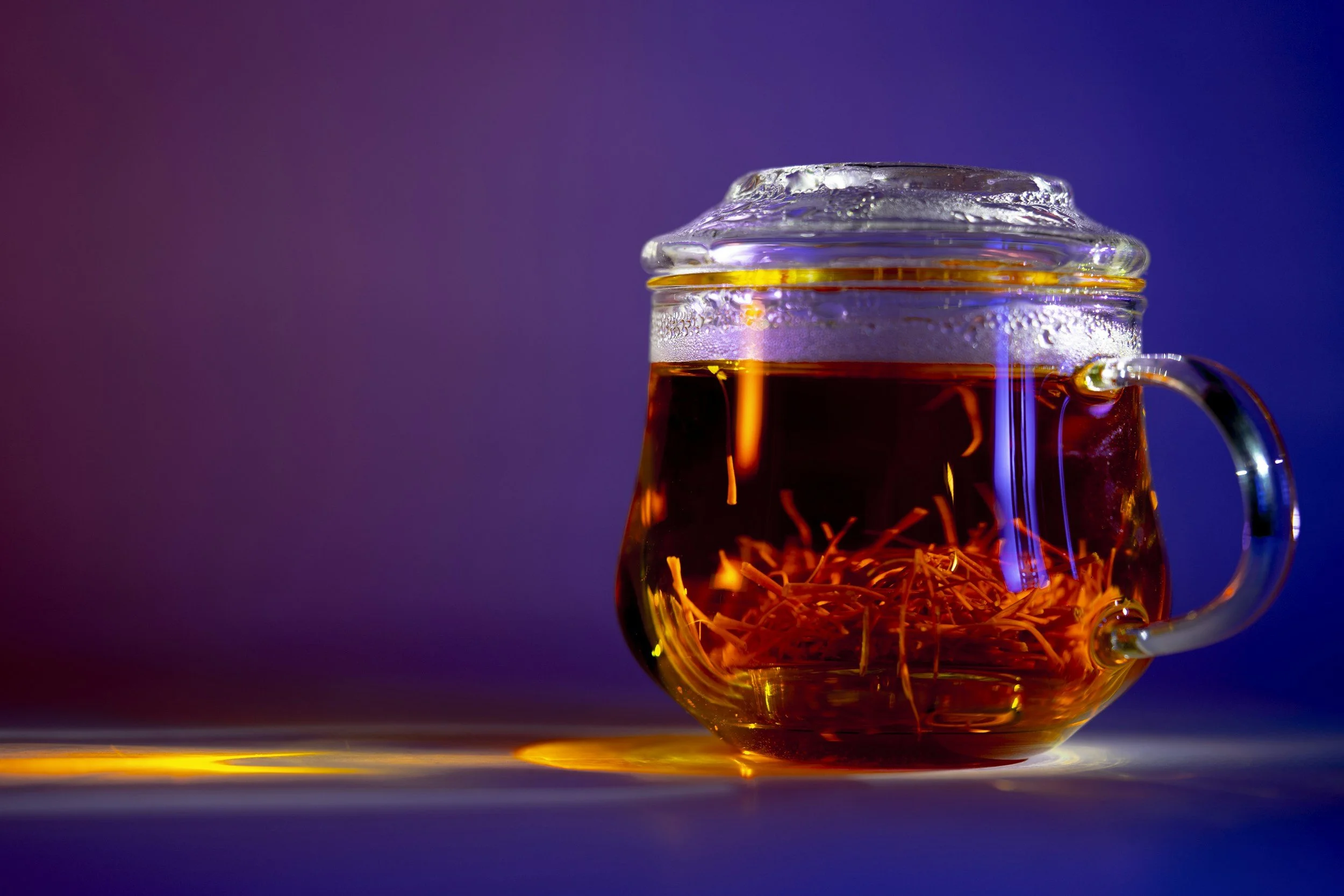
Absolutely. Saffron tea is enjoyed throughout Morocco and many other countries. Infuse a few threads in hot water for several minutes. It pairs particularly well with mint, honey, lemon, and green tea.
Does saffron have wellness benefits?
Saffron has been used in traditional cultures for centuries and is the subject of ongoing scientific research. While many people enjoy saffron as part of a healthy lifestyle, it should not be considered a substitute for professional medical advice or treatment.
Where does your saffron come from?
Our saffron is sourced directly from Taliouine in southern Morocco, a region internationally recognised for producing some of the finest saffron in the world. Every batch is selected for quality, purity, aroma, and colour.